Six Flags New Orleans
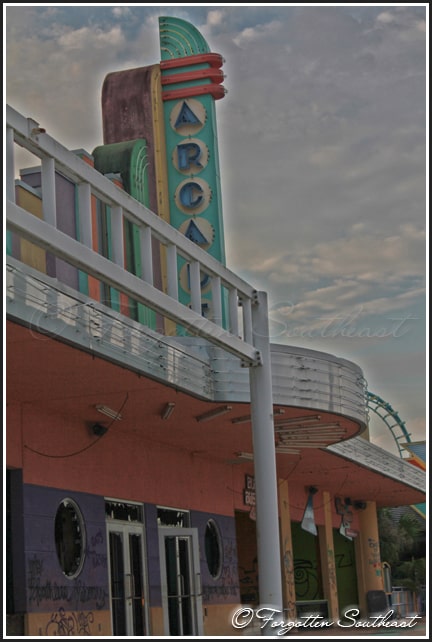
 The remnants of Six Flags New Orleans are located in the Ninth Ward off Interstate I-510 in eastern New Orleans.
Originally opening as Jazzland in May 2000, the park was operated by Alfa Smartparks before Six Flags took over the
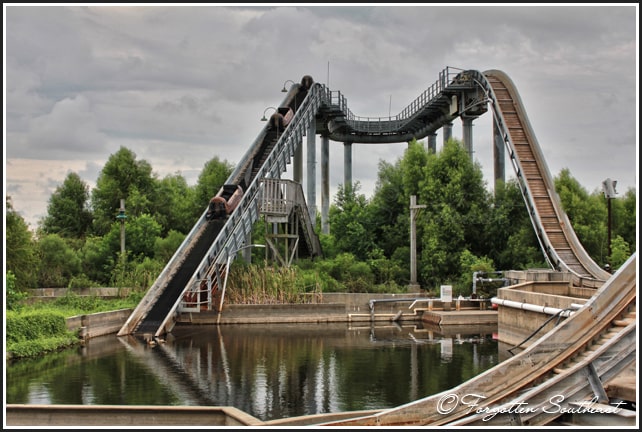
lease in 2002. One of the main attractions was the Mega Zeph, a hybrid coaster with a wooden track on a steel frame
designed to resist termite damage and withstand hurricane-force winds. Inspired by the old Zephyr roller coaster from
the defunct Pontchartrain Beach Amusement Park, the Mega Zeph was intended to be a replica of the original but was
ultimately redesigned into a larger version.
Inside Six Flags New Orleans, there were six different sections, each containing a unique theme with a variety of rides and attractions. Unfortunately, after the devastation caused by Hurricane Katrina in 2005, the park was permanently closed, and the remains of the rides have since become a haunting reminder of the once-thriving amusement park. A map of Six Flags New Orleans can be seen below, along with a description of each section.

Mardi Gras
This section contains two roller coasters, the park's signature ride, the Mega Zeph, and the Jester. The Jester was the first Vekoma Hurricane roller coaster in the United States and first debuted at Six Flags Fiesta Texas as The Joker's Revenge, before being moved to New Orleans. This coincided with the park's opening to the public in April 2003. The Mega Zeph debuted with the park's grand opening in May 2000. Today most of the wood has decayed and the steel rusted, endangering the roller coaster. Other rides and attractions in this section include but are not limited to, Dizzy Lizzy (Boomerang Ride), Jocoo's Mardi Gras Madness (indoor), Spillway Splashout, Skycoaster, Max Rex (Wipeout), and many others.
Pontchartrain Beach
This section takes its name from its predecessor and did feature a small beach where trick ski shows were held. Some of the rides included the Big Easy (Ferris Wheel) and the Zydeco Scream, a Vekoma Boomerang roller coaster. The Zydeco Scream was originally built at the former Parc de Montjuic in Barcelona Spain before being relocated to the park for its Grand Opening.
Cajun Country
Here, you could find the Muskrat Scrambler, a Wild Mouse Coaster, originally built for the Grand Opening. Also located in Cajun Country were Lafitte's Pirate Ship, Ozarka Splash (log flume ride), Gator Bait, and SpongeBob SquarePants The Ride, a motion simulator 3D ride. The motion simulator was originally named Jean Lafitte's Pirate Adventure but was rebranded during Six Flags' takeover at the end of 2002.
DC Comics Super Hero Adventures
Six Flags added this section after taking over the lease from Alfa Smartparks, and it originally debuted with the park opening in April 2003. Most of the attractions in this section came from a Japanese theme park Thrill Valley. Located in this section were Joker's Jukebox, Lex Luthor's Invertatron, and Gotham City Hall. Batman: The Ride is a former steel inverted roller coaster that was relocated to Six Flags Fiesta Texas and renamed The Goliath after the park's closure.
Looney Toon Adventures
This part of the park was originally titled Kids Carnival but was rebranded and rethemed by Six Flags. Some of the rides include: Bugs Bunny Barnstormers, Pepe Le Pew & The Swings de Paris, Daffy Duck and the Backlot Tour Bus, Tweety's Treehouse and many more.
Main Street Square
After passing through the admission gates, guests would enter Main Street Square, which featured many of the park's shops and restaurants.
Hurricane Katrina Aftermath
 The eastern sections of New Orleans suffered the most catastrophic damage from the flooding of Hurricane Katrina. The
park occupied a low-lying portion of the neighborhood which was surrounded by an earthen flood berm. During Katrina,
Lake Pontchartrain overflowed and submerged the park in corrosive and brackish water that reached 4 to 7 feet deep. The
pumps inside of the park failed and it took over a month completely drain the park.
Six Flags soon after inspected the park and released a statement saying eighty-percent of the buildings were demolished and all the rides were destroyed by the long-term saltwater corrosion. The Mega Zeph was considered damaged beyond any repair. The only ride to survive was the Batman: The Ride, which had an elevated and corrosion-resistant support structure.
In July 2006 Six Flags announced that the damage assessment was complete and declared the park to be an "effective and total loss" with no intent to rebuild. They immediately began negotiations with the city of New Orleans on terminating their 75-year lease. Then mayor, Ray Nagin, said he would hold Six Flags to their lease agreement and that Six Flags was legally obligated to rebuild the park on the same property, but only to the extent of the insurance money that they received.
The damage to the park estimated to be in range of $32.5 million and Six Flags to date had only collected $11.5 million from the insurance company. In return, Six Flags then filed a lawsuit against the company to collecting the remaining amount owed in coverage.
The park had been one of the least profitable for Six Flags. Its isolated location and the heavy crime in the area had a toll on attendance. In December 2006, Six Flags stated that would remove Batman: The Ride, the large sign from the entrance and any other salvageable items.
A New Hope
April 2008: Southern Star Amusement, Inc.(SSA) proposed to take over the lease and expand the park to 60 rides and add a waterpark along with a RV park. The park would be reopened as Legend City Adventure Park by the summer of 2009.
September 2008: SSA stated that they would no longer try to revive the park.
February 2009: SSA revived their original idea, but rather open and slowly expand the park, therefore saving money. They also asked Six Flags to return rides to the park and to stop removal of all items.
August 2009: Announcement stating the land would be developed into a Nickelodeon branded water/theme park.
September 2009: City of New Orleans fines Six Flags $3 million and orders them to vacate the lease.
Early 2010: Brush and leftover debris are cleared up.
April 2010: The Nickelodeon idea is scrapped. The city now owns the property.
January 2011: SSA once again revives their plan and posts it on their website. The park would be revamped to reflect Louisiana's heritage and history.
August 2011: City of New Orleans calls for proposals to redevelop the site. In all, eight proposals are submitted.
November 2011: The city council chooses two of the eight proposals. One is for an outlet mall, the other is for a 'green' theme park.
February 2012: The plan for the green theme park is rejected and the council accepts the proposal to build an outlet mall.
March 2012: The city of New Orleans gives the green light to build the Jazzland Outlet Mall, a 400,000 square foot upscale mall and entertainment boardwalk. The plans called to utilize some of the remaining rides. The developers would have two years to wait, after that; they could either build or walk away.
Summer of 2012: City of New Orleans allows 20th Century Fox to film 'Percy Jackson: Sea of Monsters' at the park.
A Look into the Past
I had the opportunity to sit down with Victoria Henry, who along with her family were from New Orleans and annual pass holders at the park.
She remarks that she enjoyed Jazzland because it was special to New Orleans and attributes Six Flags taking over like a Walmart coming into a small town. Although Six Flags did quickly revive the park, adding new areas, rides, concerts, etc., she felt it was no longer original to New Orleans. But she said there was always something to do and the park never got old. During that time, single day prices were in the mid-$20 range and season passes were $49.99 if you bought them early.
A special thanks to Victoria Henry and her family for sitting down and sharing some of their memories and photos with me. You may see her and other pre-Katrina photos of the park in the gallery below, followed by pictures of how Six Flags New Orleans looked in August 2011.
Panoramics